What Is the Purpose of ESD Anti-Static Boxes in Engineering & Manufacturing?
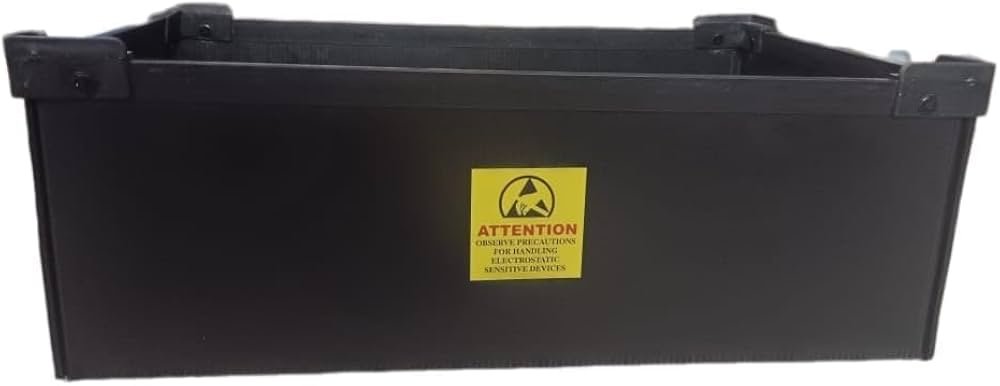
In the Engineering and Manufacturing Industry, the main purpose of ESD Anti-Static Boxes is to protect sensitive electronic and electrical components from electrostatic discharge (ESD), physical damage, dust, and contamination during storage, handling, and transportation.
Many engineering and manufacturing processes involve electronic assemblies, PCBs, sensors, controllers, and precision components that are extremely sensitive to static electricity. Even a small static shock can cause invisible damage or total failure. ESD Anti-Static Boxes safely dissipate static charges and prevent such risks. Click Here For More Product.
Key Purposes:
-
Prevent electrostatic discharge (ESD) damage
-
Protect sensitive electronic components
-
Maintain product functionality and quality
-
Reduce rework, scrap, and failure rates
-
Ensure safe in-plant and inter-plant handling
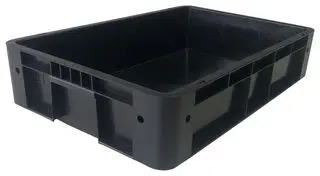
Why ESD Anti-Static Boxes Are Used in Engineering & Manufacturing
Engineering and manufacturing industries handle products that are:
-
Static-sensitive (ESD-prone)
-
High-precision and high-value
-
Used in critical applications
-
Stored and transported repeatedly
-
Assembled in controlled environments
ESD Anti-Static Boxes are preferred because they are static-dissipative, durable, reusable, lightweight, and compatible with cleanroom and industrial environments. Click Here To View Product.
Step-by-Step: How ESD Anti-Static Boxes Work
Step 1: Component Identification
Sensitive items such as PCBs, ICs, control boards, sensors, connectors, and electronic modules are identified.
Step 2: ESD-Safe Box Selection
Appropriate ESD box size and material grade (conductive or static-dissipative) are selected based on component sensitivity.
Step 3: Static Control Mechanism
The ESD box safely dissipates static electricity instead of allowing it to build up or discharge suddenly.
Step 4: Product Placement
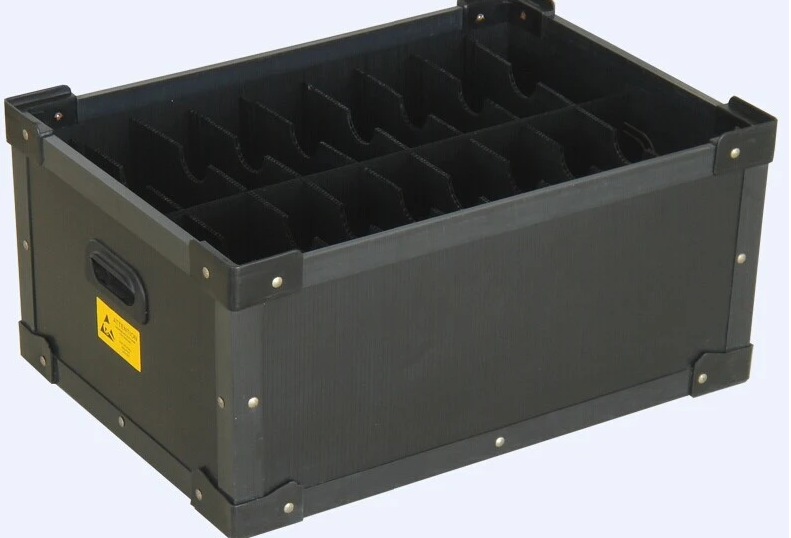
Components are placed inside the ESD box, often with ESD partitions, foam, or bubble guard for added protection.
Step 5: Safe Handling & Storage
Boxes are stacked, stored, or moved safely within production floors, warehouses, or between facilities.
Step 6: Transportation
ESD boxes ensure static-safe movement during internal logistics and supplier-to-manufacturer transport. Click Here To View Product.
How to Use and Install ESD Anti-Static Boxes (Step-by-Step)
ESD boxes are easy to use and require no special tools.
Installation & Usage Steps:
-
Open or assemble the ESD box
-
Ensure the box is clean and undamaged
-
Insert ESD partitions or cushioning if required
-
Place components carefully inside
-
Close the box securely
-
Handle only in ESD-controlled areas
✔ No glue or fasteners required
✔ Compatible with ESD flooring and workstations
✔ Easy to clean and reuse Click Here To View Product.
Advantages of ESD Anti-Static Boxes in Engineering & Manufacturing
ESD Protection
-
Prevents static buildup and discharge
-
Protects sensitive electronic components
-
Reduces hidden electrical damage
Operational Efficiency
-
Organized storage of components
-
Faster material movement
-
Reduced handling errors
Cost & Sustainability
-
Reusable for multiple cycles
-
Reduces component failure and scrap cost
-
Long service life
Performance Benefits
-
Lightweight but strong
-
Moisture and dust resistant
-
Compatible with automation and conveyors
Disadvantages of ESD Anti-Static Boxes
-
Higher initial cost than normal plastic boxes
-
Not biodegradable (but recyclable)
-
Requires ESD discipline (grounding, handling procedures)
-
Conductive grades may not be suitable for all products
However, these limitations are minimal compared to the cost of electronic component failure. Click Here To View Product.
Products Best Suited for ESD Anti-Static Boxes
ESD Anti-Static Boxes are widely used for:
-
Printed Circuit Boards (PCBs)
-
Integrated Circuits (ICs)
-
Control panels and PLC modules
-
Sensors and electronic assemblies
-
Semiconductor components
-
Engineering prototypes and test units
Best Practices for Using ESD Anti-Static Boxes
-
Use correct ESD grade (conductive or dissipative)
-
Combine with ESD partitions or trays
-
Ground operators and workstations
-
Clean boxes regularly
-
Inspect boxes for cracks or wear
-
Use in ESD-controlled zones only Click Here To View Product.
Summary: Why ESD Anti-Static Boxes Matter in Engineering & Manufacturing
ESD Anti-Static Boxes are essential in engineering and manufacturing environments where electronic reliability, precision, and quality are critical. They protect components from static damage, improve handling efficiency, and support safe, repeatable manufacturing processes.
Although the initial investment is higher than ordinary packaging, the reduction in failures, improved quality control, and long-term cost savings make ESD Anti-Static Boxes a smart and reliable solution for modern engineering and manufacturing operations.