What Is the Purpose of ESD Anti-Static Boxes in the Automotive Industry?
In the Automotive Industry, the primary purpose of ESD (Electrostatic Discharge) Anti-Static Boxes is to protect electronic and electro-mechanical automotive components from static electricity damage during storage, transportation, and in-plant handling.
Modern vehicles use a large number of electronic control units (ECUs), sensors, PCBs, and wiring assemblies. These components are highly sensitive to static charges, which can cause invisible damage, malfunction, or complete failure. ESD anti-static boxes safely dissipate static electricity and protect component functionality. Click Here For More Product.
Key Purposes:
-
Prevent electrostatic discharge (ESD) damage
-
Protect sensitive automotive electronics
-
Maintain component reliability and performance
-
Avoid hidden failures and warranty issues
-
Reduce rework, rejection, and recalls
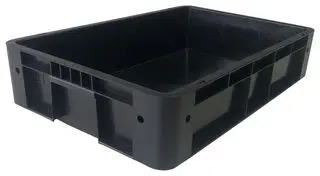
Why ESD Anti-Static Boxes Are Used in the Automotive Industry
The automotive industry increasingly relies on electronics for safety, performance, and automation. These components are:
-
Static-sensitive (ESD-prone)
-
High-value and precision-made
-
Used in safety-critical systems
-
Transported repeatedly between suppliers and plants
-
Stored and handled in bulk
ESD anti-static boxes are used because they control static electricity, are durable, reusable, lightweight, and compatible with returnable packaging systems, making them ideal for automotive electronics logistics. Click Here To View Product.
Step-by-Step: How ESD Anti-Static Boxes Work in Automotive Packaging
Step 1: Component Identification
Electronic automotive parts such as ECUs, PCBs, sensors, control modules, connectors, or infotainment components are identified.
Step 2: Static Sensitivity Assessment
Components are classified based on their ESD sensitivity level to determine required protection.
Step 3: Box Selection
Appropriate ESD anti-static box size and strength are selected based on part dimensions and weight.
Step 4: Internal Protection Setup
Optional ESD partitions, foam, or bubble guard liners are added for shock and movement protection.
Step 5: Component Loading
Each component is placed inside the box with proper spacing to avoid contact and movement.
Step 6: Safe Transportation & Storage
Boxes safely dissipate static charges while protecting parts during internal movement, storage, and transport. Click Here To View Product.
How to Use and Install ESD Anti-Static Boxes (Step-by-Step)
ESD anti-static boxes are designed for tool-free and fast installation.
Installation Steps:
-
Open or assemble the ESD box
-
Insert ESD partitions or cushioning if required
-
Ensure the box interior is clean and dry
-
Place components carefully inside
-
Avoid stacking beyond load capacity
-
Close and label the box as ESD-safe
✔ No glue or fasteners required
✔ Easy to clean and reuse
✔ Suitable for automotive production floors
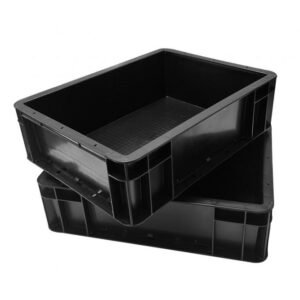
Advantages of ESD Anti-Static Boxes in the Automotive Industry
ESD Protection & Safety
-
Prevents electrostatic discharge damage
-
Protects sensitive electronic components
-
Maintains electrical performance and reliability
Operational Efficiency
-
Organized storage and handling
-
Faster material movement on assembly lines
-
Reduced handling errors Click Here To View Product.
Cost & Sustainability
-
Reusable for multiple logistics cycles
-
Reduces long-term packaging costs
-
Supports returnable packaging systems
Performance Benefits
-
Lightweight yet strong
-
Moisture and dust resistant
-
Compatible with automated handling systems Click Here To View Product.
Disadvantages of ESD Anti-Static Boxes in Automotive Packaging
-
Higher initial cost than standard plastic boxes
-
Not biodegradable (but recyclable)
-
Requires proper grounding in ESD-controlled areas
-
May lose ESD properties if damaged or contaminated
Despite these limitations, the risk reduction and quality assurance benefits far outweigh the drawbacks.
Automotive Products Best Suited for ESD Anti-Static Boxes
ESD anti-static boxes are widely used for:
-
Electronic Control Units (ECUs)
-
Printed Circuit Boards (PCBs)
-
Automotive sensors and cameras
-
Wiring harness connectors
-
Infotainment system components
-
Battery management system parts
-
ADAS and safety electronics Click Here To View Product.

Best Practices for Using ESD Anti-Static Boxes in Automotive Industry
-
Use certified ESD-grade material
-
Avoid mixing ESD and non-ESD packaging
-
Clean boxes regularly to prevent contamination
-
Inspect boxes for cracks or surface damage
-
Use ESD labels for clear identification
-
Combine with ESD partitions or foam for added protection Click Here To View Product.
Summary: Why ESD Anti-Static Boxes Matter in the Automotive Industry
ESD Anti-Static Boxes are critical in the automotive industry for protecting sensitive electronic components from electrostatic damage. As vehicles become more electronically advanced, ESD-safe packaging ensures product reliability, quality control, and compliance with industry standards.
Although the initial investment is higher than conventional packaging, the prevention of hidden failures, reduced warranty risks, and long-term cost savings make ESD anti-static boxes a smart and essential solution for automotive manufacturers and suppliers.