ESD Packaging Solutions for Aerospace Manufacturing Plants
Aerospace manufacturing plants produce highly sensitive electronic and electromechanical components such as avionics, sensors, control units, and navigation systems. These components are extremely vulnerable to Electrostatic Discharge (ESD). Even a small static shock can cause invisible damage, leading to system failure later.
ESD packaging solutions are designed to eliminate this risk and ensure safe handling throughout the manufacturing process. Click Here For More Product.
Step 1: Understanding the ESD Risk in Aerospace Manufacturing
In aerospace plants, static electricity can be generated by:
-
Human handling
-
Plastic surfaces
-
Conveyor belts
-
Dry air environments
Sensitive aerospace components like PCBs, ICs, flight control electronics, and sensors can be damaged by static discharge as low as 10–100 volts, which is not detectable by humans.
Purpose:
Identify ESD-sensitive areas and products before selecting packaging. Click Here To View Product.
Step 2: Identifying ESD-Sensitive Aerospace Components
Common aerospace components requiring ESD protection include:
-
Avionics circuit boards
-
Flight control modules
-
Radar and communication systems
-
Sensors and actuators
-
Wiring harnesses and connectors
Purpose:
Determine which components need ESD-safe packaging during storage, transport, and assembly. Click Here To View Product.
Step 3: Selecting the Right ESD Packaging Solution
Aerospace manufacturing plants use different ESD-safe packaging based on application:
-
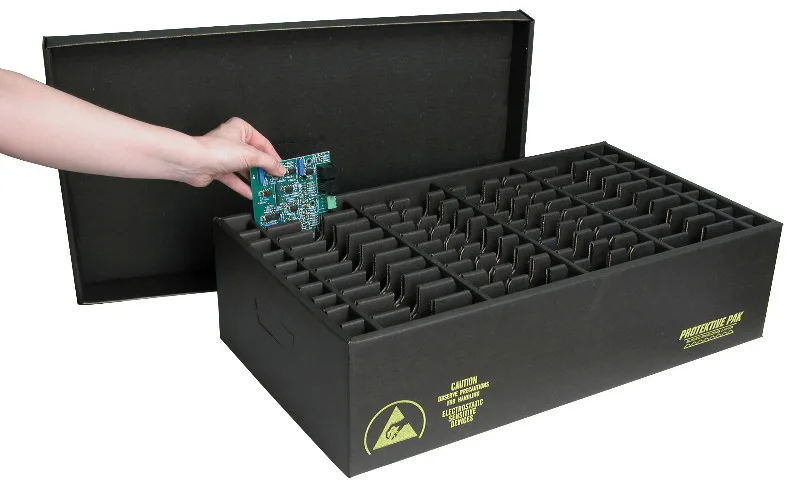
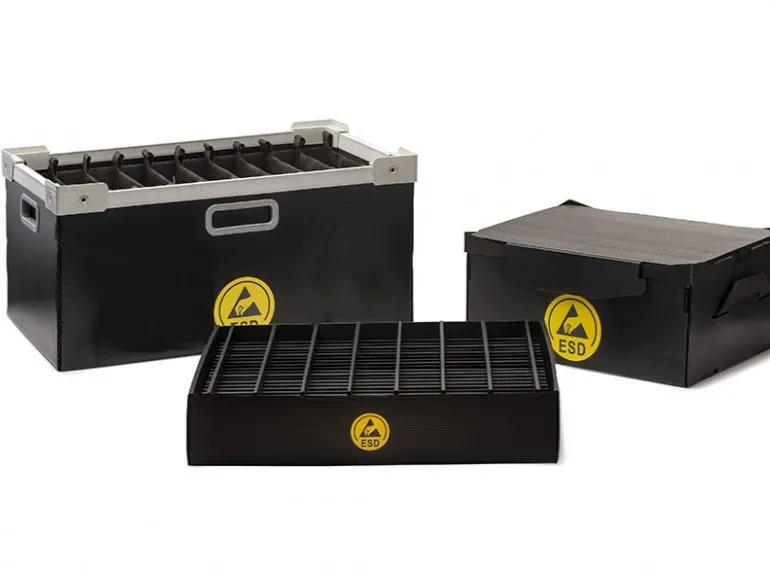
ESD Anti-Static Boxes & Bins – For storage and movement on shop floors
-
ESD PP Corrugated Boxes – For internal transport and supplier logistics
-
ESD Foam Inserts & Partitions – For cushioning and part separation
-
ESD Bubble Guard Sheets – For shock and static protection
Purpose:
Choose packaging that controls static while also providing physical protection. Click Here To View Product.
Step 4: ESD-Safe Material Properties
ESD packaging materials are designed to:
-
Dissipate static charges safely
-
Prevent charge buildup
-
Shield components from external static fields
Typical surface resistance range:
-
10⁶ to 10⁹ ohms (ESD safe range)
Purpose:
Ensure compliance with aerospace ESD standards such as ANSI/ESD S20.20. Click Here To View Product.
Step 5: Packaging Design & Customization
Packaging is customized based on:
-
Component size and weight
-
Fragility and sensitivity
-
Assembly line requirements
Custom features include:
-
Part-specific cavities
-
Layered protection
-
Stackable and returnable designs
Purpose:
Prevent movement, vibration, and static discharge simultaneously. Click Here To View Product.
Step 6: Installation and Usage in Manufacturing Plants
Step-by-step usage:
-
Place ESD-safe partitions or foam inside ESD boxes
-
Load components into individual compartments
-
Ensure grounding of packaging if required
-
Seal and label boxes as “ESD SAFE”
-
Move products between workstations safely
Purpose:
Maintain ESD protection from component entry to final assembly. Click Here To View Product.
Step 7: Integration with ESD Control Programs
ESD packaging works together with:
-
ESD flooring
-
Wrist straps
-
Grounded workstations
-
Humidity control
Purpose:
Create a complete ESD-safe environment in aerospace manufacturing plants. Click Here To View Product.
Step 8: Reusability and Cost Efficiency
ESD packaging solutions are:
-
Reusable for multiple cycles
-
Durable for long-term use
-
Cost-effective over time
Purpose:
Reduce packaging waste and operational costs in aerospace supply chains.
Step 9: Quality Control and Inspection
Regular checks include:
-
Surface resistance testing
-
Visual inspection for damage
-
Cleaning to remove contaminants
Purpose:
Ensure packaging continues to provide reliable ESD protection. Click Here To View Product.
Step 10: Benefits of ESD Packaging in Aerospace Manufacturing
-
Prevents hidden electronic failures
-
Protects high-value components
-
Improves production reliability
-
Reduces rework and warranty risks
-
Ensures regulatory compliance
-
Supports safe and efficient manufacturing Click Here To View Product.
Final Summary
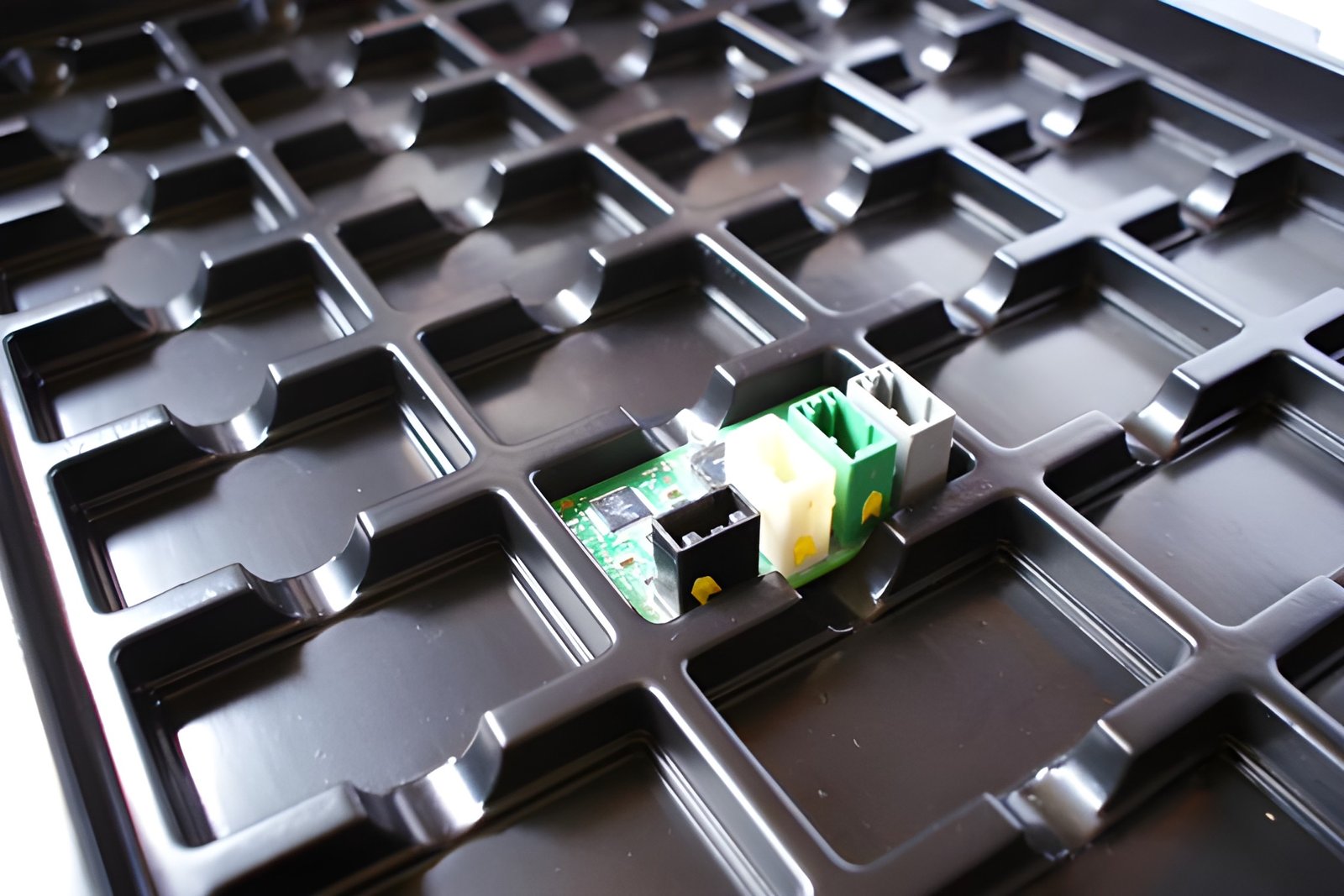
ESD Packaging Solutions are essential in aerospace manufacturing plants to protect highly sensitive electronic components from static discharge and physical damage. By using ESD-safe boxes, bins, corrugated containers, and protective inserts, manufacturers can maintain product integrity, comply with aerospace standards, and ensure long-term operational safety.
Investing in proper ESD packaging is not just a safety measure—it is a critical requirement for quality, reliability, and success in the aerospace industry.