What Is the Purpose of ESD Anti-Static Boxes in the Electronics Industry?
In the Electronics Industry, the primary purpose of ESD (Electrostatic Discharge) Anti-Static Boxes is to protect sensitive electronic components from static electricity damage, physical impact, moisture, and contamination during storage, handling, and transportation.
Electronic components can be damaged by even a small static charge that is invisible to the human eye. ESD anti-static boxes safely dissipate static electricity and prevent sudden discharge, ensuring product reliability and performance. Click Here For More Product.
Key Purposes:
-
Prevent electrostatic discharge (ESD) damage
-
Protect delicate electronic components
-
Maintain product functionality and quality
-
Prevent scratches, cracks, and impact damage
-
Reduce rejects, rework, and warranty failures

Why ESD Anti-Static Boxes Are Used in the Electronics Industry
The electronics industry handles products that are:
-
Highly sensitive to static electricity
-
Precision-manufactured and fragile
-
High-value components
-
Produced and transported in bulk
-
Used in cleanroom or controlled environments
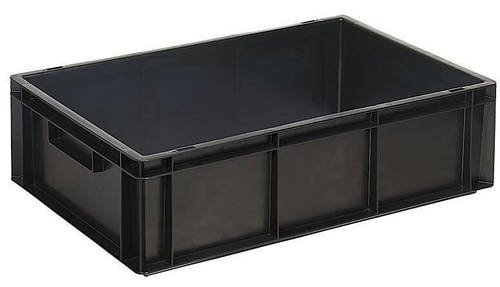
ESD anti-static boxes are preferred because they are static-dissipative, durable, lightweight, reusable, and moisture-resistant, making them ideal for electronics manufacturing and returnable packaging systems. Click Here To View Product.
Step-by-Step: How ESD Anti-Static Boxes Work in Electronics Packaging
Step 1: Component Identification
Electronic items such as PCBs, ICs, semiconductors, connectors, sensors, displays, and modules are identified.
Step 2: Box Selection
Appropriate ESD-safe box size and load capacity are selected based on component dimensions and weight.
Step 3: Internal Protection Setup
-
ESD foam, partitions, or trays added if required
-
Bubble guard or dividers used for extra cushioning
-
Anti-static liners ensure static dissipation
Step 4: Component Placement
Each electronic component is placed carefully to avoid contact, movement, or friction.
Step 5: Sealing and Labeling
Boxes are closed, sealed, and labeled with ESD warning symbols.
Step 6: Storage and Transportation
Boxes are moved safely through warehouses, assembly lines, or supply chains without static risk. Click Here To View Product.

How to Use and Install ESD Anti-Static Boxes (Step-by-Step)
ESD anti-static boxes are designed for safe and easy handling.
Installation Steps:
-
Open the ESD-safe box or bin
-
Insert ESD foam, trays, or PP partitions if needed
-
Ensure full internal coverage and stability
-
Place electronic components gently
-
Avoid stacking beyond recommended limits
-
Close and secure the box
✔ No tools required
✔ Easy to clean and reuse
✔ Suitable for ESD-controlled areas Click Here To View Product.
Advantages of ESD Anti-Static Boxes in the Electronics Industry
Protection & Safety
-
Prevents electrostatic discharge damage
-
Reduces shock, vibration, and handling impact
-
Protects sensitive and micro-electronic components
Operational Efficiency
-
Organized storage and easy identification
-
Faster packing and unpacking
-
Reduced handling and assembly errors
Cost & Sustainability
-
Reusable for multiple logistics cycles
-
Reduces product damage and replacement costs
-
Fully recyclable material
Performance Benefits
-
Static-dissipative properties
-
Moisture and dust resistant
-
Lightweight yet strong construction
Disadvantages of ESD Anti-Static Boxes
-
Higher initial cost than normal plastic or cardboard boxes
-
Not biodegradable (but recyclable)
-
Requires proper ESD handling procedures
-
May need additional internal cushioning for fragile parts
Despite these limitations, the risk reduction and product protection far outweigh the drawbacks. Click Here To View Product.
Electronic Products Best Suited for ESD Anti-Static Boxes
ESD anti-static boxes are commonly used for:
-
Printed Circuit Boards (PCBs)
-
Integrated Circuits (ICs)
-
Semiconductors and chips
-
Electronic sensors and connectors
-
Displays and LED panels
-
Power modules and control units
Best Practices for Using ESD Anti-Static Boxes
-
Always use certified ESD-safe boxes
-
Combine with ESD foam or partitions for added protection
-
Ground handling areas where required
-
Clean boxes regularly to avoid contamination
-
Avoid mixing ESD and non-ESD packaging
-
Inspect boxes after repeated reuse Click Here To View Product.
Summary: Why ESD Anti-Static Boxes Matter in the Electronics Industry
ESD Anti-Static Boxes are essential in the electronics industry for preventing static-related failures and ensuring product safety. Their ability to dissipate electrostatic charges, combined with durability and reusability, makes them a reliable solution for electronics manufacturing, storage, and logistics.
Although the initial cost is higher than conventional packaging, the long-term benefits—reduced damage, improved quality control, and lower rejection rates—make ESD anti-static boxes a smart and cost-effective investment.