What Is the Purpose of PP Partition in the Electronics Industry?
In the Electronics Industry, the primary purpose of PP (Polypropylene) partition packaging is to protect delicate electronic components from physical damage, electrostatic discharge (ESD), moisture, and contamination during storage, transportation, and handling.
Electronic products are highly sensitive to shock, vibration, and static electricity. PP partitions ensure that each component is securely separated and protected throughout the supply chain. Click Here To Product Detail.
Key Purposes:
-
Prevent scratches, cracks, and breakage
-
Avoid component-to-component contact
-
Reduce electrostatic damage (ESD)
-
Maintain product quality and functionality
-
Minimize rejects, rework, and returns Click Here To View Product.
Why PP Partition Is Used in the Electronics Industry
The electronics industry handles products that are:
-
Fragile and precision-made
-
Static-sensitive (ESD risk)
-
High-value components
-
Produced and transported in bulk
-
Frequently reused in returnable packaging systems
PP partitions are widely used because they are lightweight, durable, moisture-resistant, customizable, and available in anti-static (ESD) grades, making them ideal for electronics packaging. Click Here To View Product.
Step-by-Step: How PP Partition Works in Electronics Packaging
Step 1: Product Identification
Electronic items such as PCBs, ICs, sensors, connectors, displays, or electronic modules are identified.
Step 2: Product Measurement
Accurate measurements (length, width, height) are taken to design perfect-fit partition cells.
Step 3: Partition Design Selection
-
Tight-fit cells for PCBs and ICs
-
Soft-edge partitions for screens and displays
-
Reinforced cells for heavier electronic modules
Step 4: Placement Inside Box or Crate
The PP partition is placed inside cartons, ESD-safe bins, or reusable plastic crates.
Step 5: Product Loading
Each electronic component is placed into its own compartment, avoiding movement and contact.
Step 6: Sealing & Transportation
The packed box is sealed and safely transported to factories, warehouses, or customers. Click Here To View Product.
How to Install PP Partition in Electronics Packaging (Step-by-Step)
PP partitions are easy to install and ideal for cleanroom or controlled environments.
Installation Steps:
-
Open the carton or ESD-safe crate
-
Insert the pre-cut PP partition sheets
-
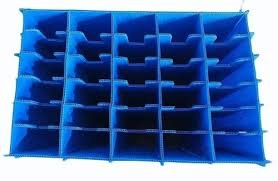
Interlock vertical and horizontal panels
-
Ensure a tight and stable fit
-
Verify uniform cell alignment
-
Place electronic products carefully
-
Close and seal the package
✔ No glue required
✔ Easy to remove, clean, and reuse Click Here To View Product.
Advantages of PP Partition Packaging in the Electronics Industry
Protection & Safety
-
Prevents mechanical damage
-
Reduces vibration and shock impact
-
Available in anti-static (ESD) material
Operational Efficiency
-
Faster packing and unpacking
-
Organized component storage
-
Reduced handling errors
Cost & Sustainability
-
Reusable for multiple cycles
-
Reduces long-term packaging costs
-
Recyclable and eco-friendly
Performance
-
Moisture-resistant
-
Lightweight but strong
-
Durable for repeated logistics cycles Click Here To View Product.
Disadvantages of PP Partition in Electronics Packaging
-
Higher initial cost compared to cardboard
-
Not biodegradable (but recyclable)
-
Requires ESD-grade PP for sensitive items
-
Can deform under extreme heat
-
Customization required for best fit
Despite these limitations, PP partitions offer superior protection and cost savings over time. Click Here To View Product.
Electronics Products Best Suited for PP Partition Packaging
PP partitions are commonly used for:
-
Printed Circuit Boards (PCBs)
-
Integrated Circuits (ICs)
-
Electronic sensors and connectors
-
Mobile phone components
-
LED panels and displays
-
Power modules and control units
-
Consumer electronics accessories
Best Practices for Using PP Partitions in the Electronics Industry
-
Use anti-static (ESD) PP partitions
-
Select 3–5 mm thickness for most electronics
-
Avoid over-tight packing
-
Clean partitions regularly
-
Inspect for damage after reuse
-
Use returnable crates for cost efficiency Click Here To View Product.
Summary: Why PP Partition Matters in the Electronics Industry
PP Partition packaging is essential in the electronics industry for protecting sensitive components, improving operational efficiency, and reducing product damage. Its durability, reusability, and ESD-safe properties make it a reliable and cost-effective packaging solution.
Although the initial cost is higher than disposable packaging, the long-term benefits—including reduced damage, improved quality control, and sustainable operations—make PP partitions a smart choice for electronics manufacturers and suppliers. Click Here To View Product.
Advantages of PP Partition Packaging
-
Excellent Product Protection
Prevents damage caused by impact, vibration, friction, and movement during transportation and handling. -
Prevents Product-to-Product Contact
Each item is placed in a separate cell, avoiding scratches, cracks, and breakage. -
Lightweight but Strong
Polypropylene is light in weight yet strong enough to support repeated use without losing shape. -
Reusable and Long-Lasting
Can be reused for multiple cycles, making it cost-effective over time. -
Moisture and Chemical Resistant
Does not absorb water and resists oils, chemicals, and detergents—ideal for pharma, electronics, and FMCG. -
Customizable Design
Cell size, thickness, and layout can be customized based on product size, weight, and sensitivity. -
Improves Packing Efficiency
Makes packing and unpacking faster, organized, and error-free in warehouses and assembly lines. -
Hygienic and Easy to Clean
Suitable for pharmaceutical and food-related products due to easy washability. -
Eco-Friendly (Recyclable)
Fully recyclable and supports sustainable, returnable packaging systems. -
ESD / Anti-Static Options Available
Protects sensitive electronic components from static electricity damage. Click Here To View Product.
Disadvantages of PP Partition Packaging
-
Higher Initial Cost
More expensive than cardboard or paper-based dividers at the initial stage. -
Not Biodegradable
Although recyclable, PP material does not decompose naturally like paper packaging. -
Heat Sensitivity
Can deform under very high temperatures or prolonged heat exposure. -
Customization Required
Improper design or wrong cell size can reduce effectiveness, requiring precise customization. -
Not Ideal for Extremely Heavy Loads
Heavy products require thicker PP or reinforced designs, increasing cost. -
Cleaning Required for Reuse
In pharma and electronics industries, regular cleaning and inspection are necessary.