What Is the Purpose of PP Partition Packaging?
The main purpose of PP (Polypropylene) Partition Packaging is to:
-
Separate products inside a box or container
-
Prevent damage caused by impact, friction, or movement
-
Improve organization during storage and transportation
-
Increase handling efficiency in logistics and warehouses
-
Reduce product loss and return costs
PP partitions are especially useful when multiple items are packed together but must not touch each other. Click Here To Product Detail.
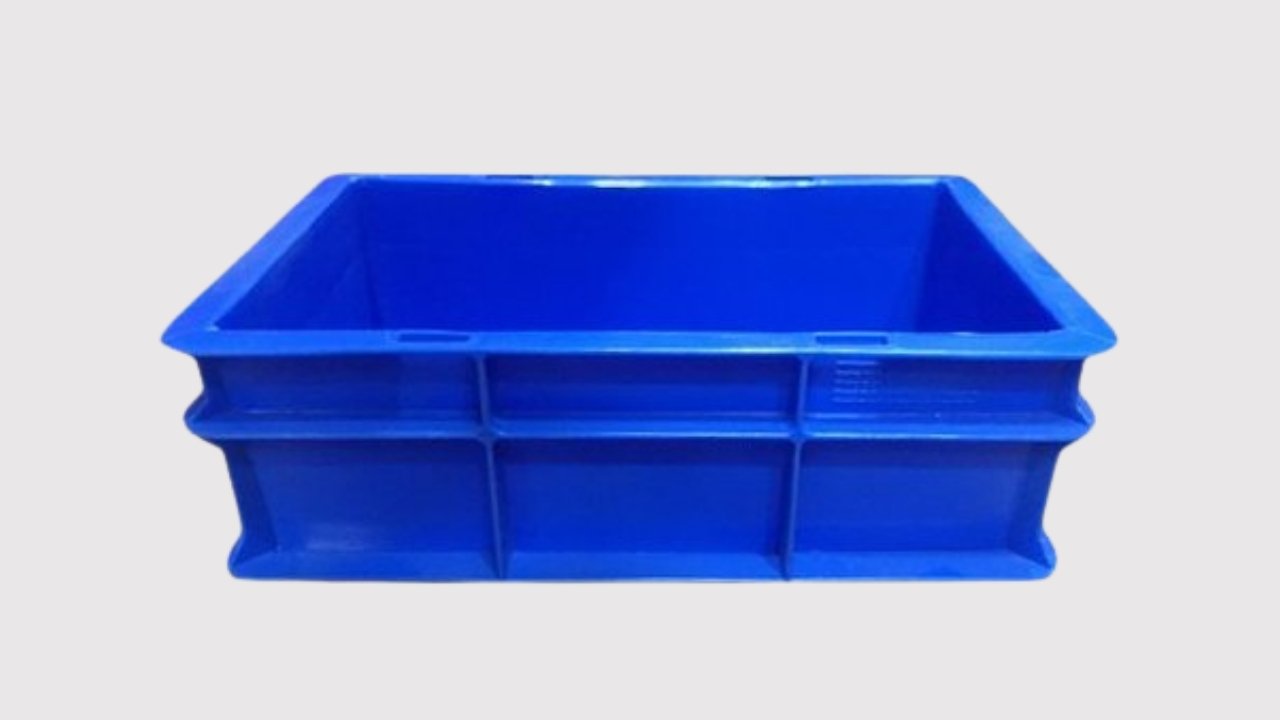
How PP Partitions Are Made (Manufacturing Process)
Step-by-Step Process:
Raw Material Selection
-
-
High-quality polypropylene sheets or PP corrugated boards are used.
-
Material thickness is chosen based on product weight and fragility.
-
Sheet Cutting
-
-
PP sheets are cut into required sizes using:
-
Die-cutting machines
-
CNC cutting machines
-
Manual cutting (small scale)
-
-
Slotting & Interlocking Design
-
-
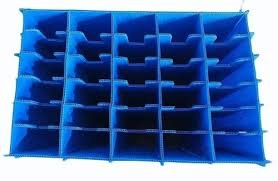
Slots are created so partitions can interlock vertically and horizontally.
-
This forms cells that hold products securely.
-
Customization
-
-
Cell size, shape, and height are customized based on product dimensions.
-
Anti-static or color-treated PP can be used if required. Click Here To View Product.
-
Quality Check
-
-
Strength, flexibility, and fitting accuracy are checked.
-
Finished partitions are tested with actual products.
-
Life Span / How Many Years PP Partition Lasts
-
Average lifespan: 3 to 7 years
-
Reusable cycles: 50–200+ uses (depending on handling)
-
Factors affecting lifespan:
-
Product weight
-
Handling method
-
Storage conditions
-
Exposure to chemicals or heat
-
With proper use, PP partitions last much longer than paper or cardboard dividers. Click Here To View Product.
Advantages of PP Partition Packaging
-
Lightweight yet strong
-
Reusable and long-lasting
-
Moisture and chemical resistant
-
Easy to clean and maintain
-
Customizable design
-
Reduces transportation damage
-
Cost-effective over time
-
Environment-friendly (recyclable)
Disadvantages of PP Partition Packaging
-
Higher initial cost compared to cardboard partitions
-
Not biodegradable (but recyclable)
-
May deform under very high heat
-
Not suitable for extremely heavy loads unless thick grade is used
-
Requires proper design for maximum strength Click Here To View Product.
Advanced Features (Modern / Advanced Usage)
-
Anti-static PP partitions – for electronics
-
ESD-safe partitions – prevents static damage
-
Color-coded partitions – easy product identification
-
Foldable / collapsible designs – saves storage space
-
Laser-cut precision partitions – exact product fit
Choosing the Right PP Partition Based on Product
Selecting the correct PP partition depends mainly on product size, weight, and sensitivity. Proper selection ensures maximum protection, better organization, and longer partition life.
Based on Product Size
-
Small products such as electronic chips, medical vials, or small components require 2–3 mm thick PP partitions. These partitions are designed with tight-fit cells to prevent movement and protect delicate items.
-
Medium-sized products like bottles, containers, or standard industrial parts are best supported using 3–5 mm thick PP partitions with a standard grid pattern, providing balanced strength and flexibility.
-
Large products, including automotive parts or bulky components, need 5–8 mm thick PP partitions with reinforced cell structures to handle size and handling stress safely. Click Here To View Product.
Based on Product Weight
-
Lightweight products are well-suited for thin PP partitions with a higher number of cells, which keeps items separated without adding extra weight.
-
Medium-weight products require moderate PP thickness with reinforced joints to maintain shape during repeated handling.
-
Heavy products need thick PP partitions designed with rib support or strengthened frames to prevent bending or deformation.
Based on Product Quality and Sensitivity
-
Fragile products such as glassware and ceramic items need soft-edge PP partitions with a snug fit to absorb shocks and prevent surface damage.
-
Medical and pharmaceutical products require hygienic, chemical-resistant PP partitions that meet cleanliness and safety standards.
-
Electronic components should be packed using anti-static or ESD-safe PP partitions to protect against static electricity damage.
-
Chemical products demand high chemical-resistant PP partitions to safely handle corrosive or reactive substances.
-
FMCG products are best packed using standard reusable PP partitions, offering durability and cost efficiency for high-volume movement. Click Here To View Product.
Which Products Match Best with PP Partition Packaging?
PP partitions are best suited for:
- Automotive components
- Pharmaceutical bottles & vials
- Electronic parts & PCBs
- Glass bottles & jars
- Cosmetic containers
- Paint cans & chemical containers
- Precision industrial components
Conclusion
PP Partition Packaging is a modern, reusable, and protective packaging solution designed to improve product safety, organization, and logistics efficiency. Though the initial cost is slightly higher, its long life, durability, and reduced damage losses make it a smart investment for industries handling sensitive or valuable products.