What Are ESD Anti-Static Boxes in Aerospace Packaging?
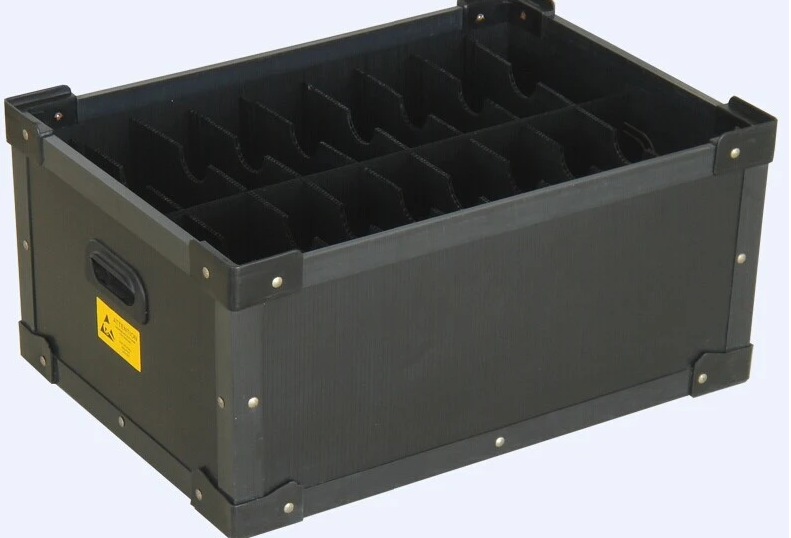
ESD (Electrostatic Discharge) Anti-Static Boxes are specially designed packaging solutions used in the aerospace industry to protect highly sensitive electronic, electrical, and avionic components from static electricity, physical damage, contamination, and environmental exposure.
These boxes are made from ESD-safe polypropylene or conductive materials that prevent static charge buildup and safely dissipate electrostatic energy, ensuring component reliability and flight safety. Click Here For More Product.
Purpose of ESD Anti-Static Boxes in Aerospace Packaging
In aerospace applications, even a minor static discharge can lead to component failure, system malfunction, or safety risks. The primary purpose of ESD anti-static boxes is to provide maximum protection throughout storage, handling, transport, and assembly.
Key Purposes:
-
Prevent electrostatic discharge (ESD) damage
-
Protect precision avionics and electronic systems
-
Avoid short circuits and latent component failures
-
Maintain component integrity during transport
-
Support aerospace quality and safety standards Click Here To View Product.
Why ESD Anti-Static Boxes Are Essential in the Aerospace Industry
The aerospace industry deals with products that are:
-
Extremely sensitive to static electricity
-
High-value and mission-critical
-
Precision-engineered with zero-defect tolerance
-
Subject to long storage and global transportation
-
Regulated by strict quality and safety standards
ESD anti-static boxes are used because they are durable, lightweight, reusable, contamination-resistant, and compliant with aerospace and ESD control requirements.
Step-by-Step: How ESD Anti-Static Boxes Work in Aerospace Packaging
Step 1: Component Identification
Sensitive aerospace components such as avionics modules, control units, sensors, circuit boards, and connectors are identified.
Step 2: ESD Risk Assessment
The level of static sensitivity is evaluated to select the correct anti-static or conductive grade box.
Step 3: Box & Internal Protection Design
-
ESD-safe boxes selected
-
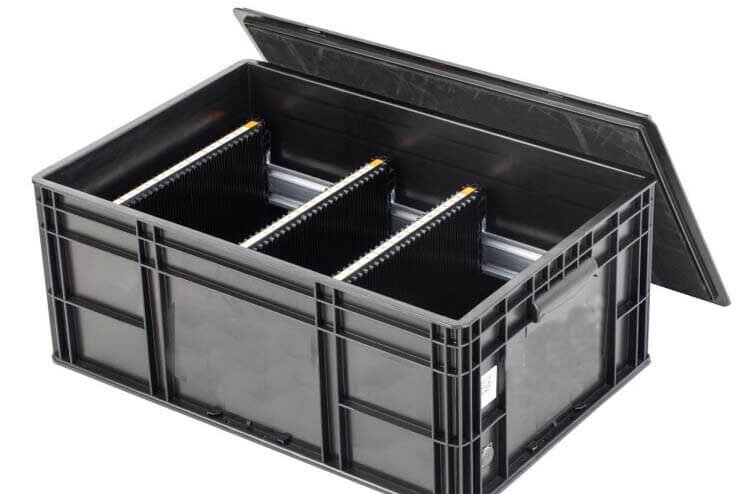
Internal ESD foam, trays, or partitions added
-
Cushioning provided for shock and vibration protection
Step 4: Component Placement
Each component is placed securely inside the box, ensuring no movement or contact.
Step 5: Sealing & Labeling
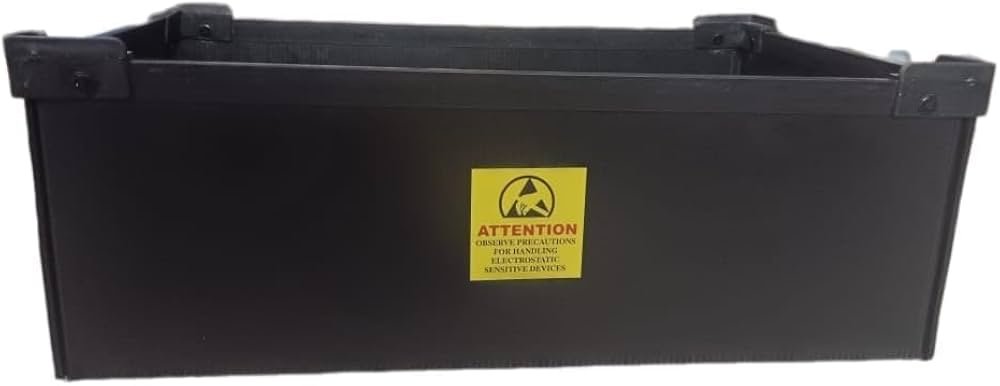
Boxes are sealed and labeled with ESD warning symbols and aerospace compliance information.
Step 6: Safe Storage & Transportation
The packaged components are safely transported or stored without risk of static damage. Click Here To View Product.
How to Use and Install ESD Anti-Static Boxes (Step-by- Step)
Installation Steps:
-
Open the ESD-safe box in an ESD-controlled area
-
Place ESD foam, trays, or partitions inside
-
Ensure full static-safe coverage
-
Place aerospace components carefully
-
Add top cushioning if required
-
Close and secure the box properly
✔ No static charge buildup
✔ Easy to open, clean, and reuse
✔ Suitable for cleanroom and controlled environments Click Here To View Product.
Advantages of ESD Anti-Static Boxes in Aerospace Packaging
ESD & Component Protection
-
Prevents electrostatic discharge damage
-
Protects sensitive avionics and electronics
-
Reduces latent failures and malfunctions
Mechanical Protection
-
Absorbs shock and vibration
-
Prevents scratches, cracks, and deformation
Operational Efficiency
-
Organized and secure component storage
-
Faster handling and inspection
-
Reduced packaging errors
Cost & Sustainability
-
Reusable for multiple cycles
-
Long service life
-
Recyclable and eco-friendly materials
Performance Benefits
-
Lightweight yet strong
-
Moisture and dust resistant
-
Stable under aerospace logistics conditions Click Here To View Product.
Disadvantages of ESD Anti-Static Boxes
-
Higher initial cost than standard plastic boxes
-
Requires ESD compliance awareness during handling
-
Not biodegradable (but recyclable)
-
Extreme heat may affect material properties
However, in aerospace applications, safety and reliability outweigh cost considerations.
Aerospace Components Best Suited for ESD Anti-Static Boxes
Common aerospace applications include:
-
Avionics control units
-
Flight control electronics
-
Navigation and communication modules
-
Aerospace PCBs and circuit assemblies
-
Sensors and connectors
-
Radar and satellite components Click Here To View Product.
Best Practices for Using ESD Anti-Static Boxes in Aerospace
-
Use certified ESD-safe materials only
-
Handle boxes in ESD-controlled zones
-
Combine with ESD foam or conductive partitions
-
Inspect boxes regularly for wear or damage
-
Clean boxes using approved ESD-safe methods
-
Clearly label all ESD-sensitive packaging Click Here To View Product.
Summary: Why ESD Anti-Static Boxes Matter in Aerospace Packaging
ESD Anti-Static Boxes are critical to aerospace packaging solutions, ensuring the protection of high-value, sensitive components from electrostatic discharge, mechanical damage, and contamination. Their reliability, reusability, and compliance with strict aerospace standards make them indispensable across manufacturing, storage, and global logistics.
While the initial investment is higher, the risk reduction, component safety, and long-term cost savings make ESD anti-static boxes a smart and essential solution for the aerospace industry.